





Introduction
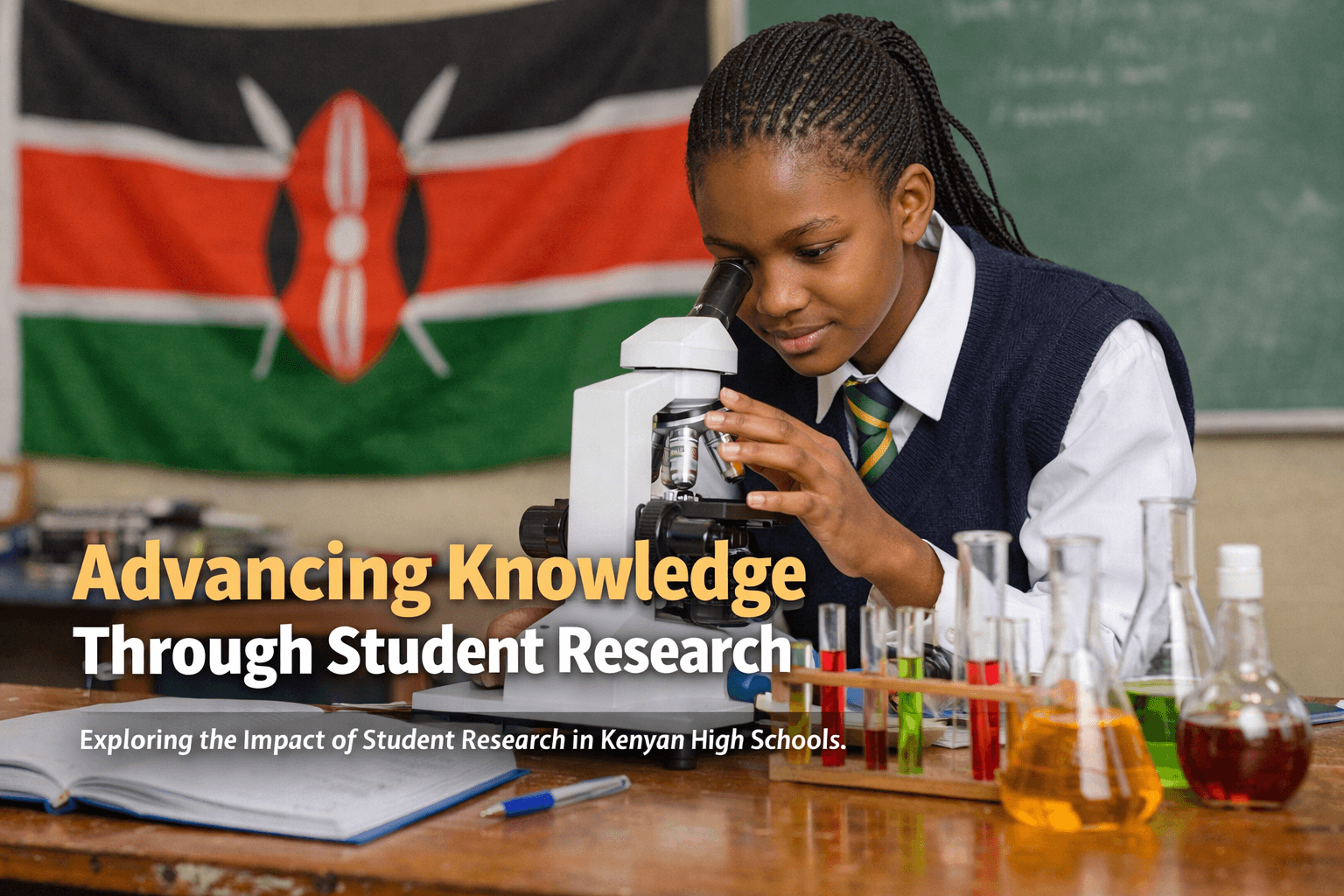
In today’s rapidly evolving world, education is no longer just about passing exams—it is about preparing students to think critically, solve real‑world problems, and contribute meaningfully to society. For Kenyan high schools, student research offers a powerful pathway to advance knowledge, nurture innovation, and empower learners to become future leaders. By engaging in research, students move beyond rote memorization and begin to explore, question, and create. This blog explores why student research matters, how it is being implemented in Kenya, and the transformative impact it can have on learners and communities.
—
Why Student Research Matters
- Critical Thinking: Research teaches students to analyze information, evaluate evidence, and draw logical conclusions.
- Problem‑Solving: By investigating local issues—such as pollution, health, or urbanization—students learn to design solutions relevant to their communities.
- Confidence Building: Presenting findings in exhibitions or debates strengthens communication skills and self‑belief.
- Future Readiness: Research prepares students for university and careers in science, technology, and policy.
In Kitengela, for example, students from Nairobi French School participated in the IRD Youth Club, conducting field investigations on urban expansion and pollution. They collected data, interviewed residents, and presented findings at an exhibition, gaining first‑hand experience of scientific inquiry.
—
The Kenyan Context
Kenya’s education system has traditionally emphasized exam performance, particularly the KCSE. However, evidence shows that integrating research and evidence‑based study methods significantly boosts outcomes. A 2024 pilot program in Nairobi schools demonstrated that students using retrieval practice and spaced repetition improved KCSE scores by 15–20%, especially in mathematics and physics. This proves that when students are taught how to learn through inquiry and experimentation, their academic performance rises.
—
Benefits for Students
- Academic Excellence: Students gain deeper understanding of subjects by applying concepts in real projects.
- Community Engagement: Research connects students with local challenges, making learning relevant.
- Innovation: Young minds generate creative solutions, from environmental conservation to digital tools.
- Leadership Development: Research projects encourage teamwork, responsibility, and initiative.
- Global Competence: Exposure to research methods aligns Kenyan students with international standards, preparing them for global opportunities.
—
Examples of Student Research in Kenya
- Environmental Studies: Students in Kitengela investigated pollution and urban expansion, linking findings to sustainable development goals.
- Health Research Engagement: Secondary school students in Kilifi collaborated with the KEMRI‑Wellcome Trust to explore health issues using participatory video, learning how research impacts public health.
- STEM Innovation: Schools adopting evidence‑based learning strategies saw dramatic improvements in science subjects, proving the value of research‑driven pedagogy.
—
How Schools Can Promote Student Research
- Establish Research Clubs: Create platforms where students can design and conduct projects.
- Integrate Research into Curriculum: Encourage inquiry‑based assignments in sciences, humanities, and arts.
- Partnerships with Universities: Collaborate with institutions like JKUAT or KEMRI to expose students to advanced research.
- Community‑Based Projects: Link research to local issues such as waste management, water conservation, or digital literacy.
- Annual Exhibitions: Showcase student findings to peers, parents, and policymakers, reinforcing the value of research.
—
Challenges and Solutions
- Limited Resources: Many schools lack laboratories or equipment. Solution: Partner with local universities and NGOs for shared facilities.
- Teacher Training: Not all teachers are skilled in guiding research. Solution: Provide professional development workshops.
- Student Motivation: Some learners see research as extra work. Solution: Highlight real‑world impact and offer recognition through awards.
- Funding: Research projects require support. Solution: Seek sponsorship from government, private sector, and community organizations.
—
The Future of Student Research in Kenya
As Kenya transitions to competency‑based curriculum (CBC), research will play a central role. CBC emphasizes skills, creativity, and problem‑solving—exactly what student research fosters. By embedding research culture in high schools, Kenya can produce graduates who are not only exam‑ready but also innovation‑ready. These students will be equipped to tackle pressing challenges such as climate change, unemployment, and digital transformation.
—
Conclusion
Advancing knowledge through student research is more than an academic exercise—it is a national investment. Kenyan high schools that embrace research empower their learners to think critically, innovate boldly, and contribute meaningfully to society. By fostering curiosity and inquiry, schools prepare students not just for exams, but for life. The future of Kenya’s knowledge economy depends on nurturing this generation of researchers.